From the same workshop: deepgroovehifi.com · audiochainhifi.com
Hi-Fi Audio Comparison Engine

Compare
Any
Component.

Select a category, enter 2–6 specific models, and get a full side-by-side spec table with editorial summaries and review links — powered by AI.

Hi-fi amplifier with illuminated VU meters Photo: Unsplash · Free Commercial License
10
Component Categories
6
Components Per Session
12+
Specs Per Component
AI
Powered by Claude
Advertisement
About this tool

A free, independent hi-fi comparison tool

AudioScope Hi-Fi lets you compare any audio components side by side — regardless of brand — in a consistent, structured format. Enter the models you are researching, select the category, and get a full specification table with editorial summaries, key strengths, and direct links to published reviews and YouTube demonstrations.

The tool covers ten component categories across the full hi-fi chain: sources, amplification, and transducers. It is designed for buyers in the mid-fi range — typically $400 to $4,000 per component — where specifications have a measurable relationship to audible performance and every upgrade decision involves real trade-offs. If you have ever spent an afternoon switching between manufacturer spec pages trying to reconcile different formats and missing values, AudioScope was built to fix that.

AudioScope is independent and unaffiliated with any manufacturer or retailer. All comparisons draw from the same knowledge base, so a Rega sits next to a Pro-Ject sits next to a Music Hall in the same table, with the same fields — no vendor bias.

Supported categories

Choose from ten component types spanning the entire signal chain:

  • Integrated Amplifiers
  • Preamplifiers
  • Phono Preamplifiers
  • Turntables
  • Tonearms
  • Phono Cartridges
  • DACs
  • Network Streamers
  • Loudspeakers
  • Headphones

Specifications retrieved include output power, frequency response, THD+N, signal-to-noise ratio, sensitivity, impedance, physical dimensions in metric and imperial, driver topology, and category-specific measurements. Each component also receives an editorial summary drawn from published reviews and manufacturer documentation.

How it works: Comparisons are powered by Anthropic's Claude AI, trained on manufacturer datasheets and widely-read audio publications including Stereophile, What Hi-Fi?, and Audio Science Review. Specifications for established, well-reviewed products are generally reliable; newer or boutique components may have gaps. Always verify critical figures with the manufacturer before purchasing.

Step 1

Select a Category

Choose a component type below, then add 2–6 models by brand and model name.
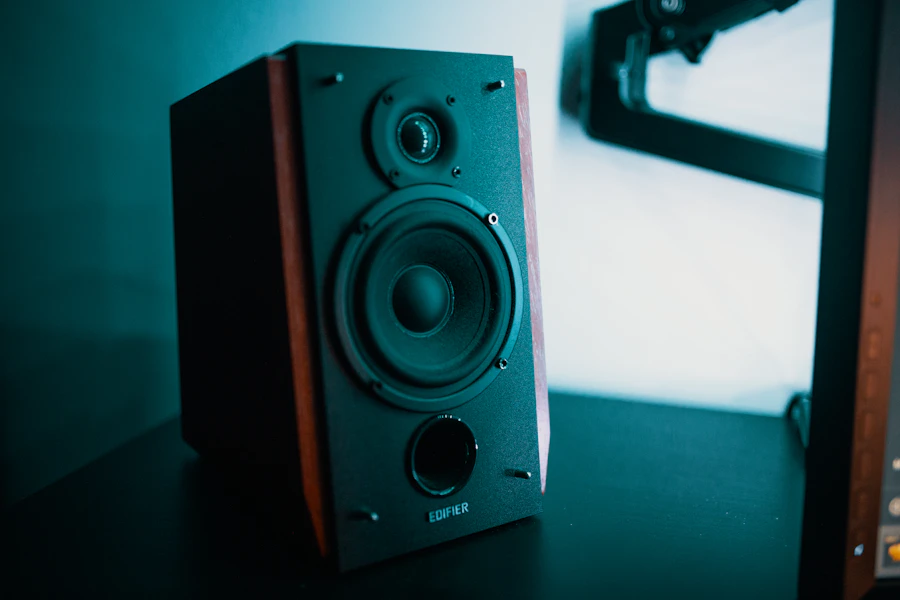
Loudspeaker woofer
Compare
Loudspeakers
Unsplash Free Use
Premium headphones
Compare
Headphones
Unsplash Free Use
Compare
Turntables
Buying guide

What to focus on when comparing

Not all specs matter equally. Here are the two or three numbers that actually move the needle for each component type.

Amplifiers
Focus on
  • Output power (W into 4Ω and 8Ω) — must match your speakers' sensitivity
  • THD+N — lower is cleaner; below 0.1% is solid
  • Damping factor — higher = tighter bass control
Preamps
Focus on
  • Gain (dB) — must play nicely with your amp's input sensitivity
  • SNR (signal-to-noise ratio) — higher is quieter
  • Output impedance — should be 10× lower than amp input impedance
Phono preamps
Focus on
  • Cartridge compatibility (MM vs MC, load impedance)
  • RIAA accuracy (±dB) — tighter curves = more faithful playback
  • SNR — phono signals are tiny; noise floor matters a lot
Turntables
Focus on
  • Wow & flutter (%) — lower means steadier pitch; under 0.1% is good
  • Drive type (belt vs direct) — affects vibration isolation
  • Included tonearm quality and cartridge upgrade path
Tonearms
Focus on
  • Effective mass (g) — must be matched to cartridge compliance
  • Bearing quality (friction, play) — less is better
  • Headshell offset and overhang geometry
Cartridges
Focus on
  • Output voltage (mV) — determines MM vs MC phono stage need
  • Tracking force range (g) — must suit your tonearm
  • Stylus profile (spherical, elliptical, line contact)
DACs
Focus on
  • Bit depth and sample rate support (native DSD, MQA, PCM)
  • THD+N and dynamic range (dB) — higher is better
  • Output stage topology (op-amp vs discrete vs transformer)
Streamers
Focus on
  • Supported protocols (Roon Ready, AirPlay 2, UPnP, Spotify Connect)
  • Clock quality and jitter — affects DAC performance
  • App ecosystem and long-term software support
Speakers
Focus on
  • Sensitivity (dB/W/m) — paired with your amp's output power
  • Nominal impedance (Ω) and minimum dip — can your amp drive it?
  • Frequency response and crossover topology
Headphones
Focus on
  • Impedance (Ω) — high impedance needs a dedicated amp
  • Sensitivity (dB/mW) — how loud from a given source
  • Driver type (dynamic, planar magnetic, electrostatic)
Reference

Spec glossary

Plain-English definitions for the terms you'll see in every comparison table.

Amplification
THD+N
Total harmonic distortion plus noise — the percentage of unwanted signal added by the component. Lower is cleaner; under 0.1% is audibly transparent for most listeners.
SNR
Signal-to-noise ratio in dB. Measures how far the music sits above the noise floor. Above 90 dB is solid; above 100 dB is excellent.
Damping factor
How well an amplifier controls the movement of a speaker cone after a transient. Higher values (100+) generally mean tighter, more controlled bass.
Gain
How much an amplifier or preamp multiplies the input signal, measured in dB. Too much gain in a chain causes clipping; too little leaves you short of volume.
Input impedance
The load a component presents to whatever is driving it. Higher input impedance is generally easier to drive and causes less signal loss.
Output impedance
The impedance a component presents at its output. Lower is better — aim for at least a 1:10 ratio against the input it is driving.
Digital audio
Bit depth
Determines the dynamic range of a digital recording. 16-bit gives ~96 dB; 24-bit gives ~144 dB of theoretical headroom.
Sample rate
How many audio snapshots are taken per second (Hz or kHz). 44.1 kHz is CD standard; 192 kHz is hi-res. Higher is not always audibly better.
Jitter
Timing errors in the digital clock. Audible as a kind of smearing or harshness. Lower jitter (measured in picoseconds) means cleaner conversion.
DSD
Direct stream digital — a 1-bit, very high sample-rate format used in SACDs. Some DACs support native DSD decoding; others convert to PCM first.
MQA
A proprietary hi-res encoding format used by Tidal. Requires an MQA-capable DAC for full unfolding. Controversial among audiophiles.
Speakers & headphones
Sensitivity
How loud a speaker or headphone plays from a given power input, measured in dB/W/m (speakers) or dB/mW (headphones). Higher sensitivity means easier to drive.
Nominal impedance
The rated resistance of a speaker in ohms. Most home speakers are 4–8 Ω. Lower impedance demands more current from the amplifier.
Frequency response
The range of frequencies a component can reproduce, typically shown as Hz–kHz with a ±dB tolerance. Flatter is more accurate; wider is not always better.
Crossover
A network (passive or active) that splits frequencies between drivers (tweeter, mid, woofer). Higher-order crossovers (2nd, 3rd) roll off more steeply.
Driver type
Dynamic drivers use a moving coil; planars use a thin membrane; electrostatics use a charged panel. Each has distinct sonic and power-handling characteristics.
Vinyl & analogue
Wow & flutter
Slow (wow) and fast (flutter) speed variations in a turntable, measured as a percentage. Lower is better; under 0.1% is generally inaudible.
RIAA curve
A standardised equalisation applied during vinyl recording and reversed during playback. Phono stages that deviate from this curve will colour the sound.
Cartridge compliance
How easily the stylus can move laterally, measured in CU (10⁻⁶ cm/dyne). Must be matched with tonearm effective mass to avoid resonance problems.
Stylus profile
The shape of the diamond tip. Spherical is durable but less detailed; elliptical traces better; line-contact and Shibata profiles retrieve the most information.
Tracking force
The downward pressure of the stylus on the groove, measured in grams. Too light causes mistracking; too heavy accelerates record and stylus wear.
Learn More

Hi-Fi Guides

In-depth explainers to help you understand your equipment and make better buying decisions.

DACs
What Is a DAC and Do You Need One?
Amplifiers
How to Match an Amplifier to Your Speakers
Turntables
Turntable Setup: Alignment, Tracking Force & VTA
Vinyl
What Is a Phono Preamp and Why Vinyl Needs One
About AudioScope Hi-Fi

Built for audiophiles who want real information, not guesswork

AudioScope Hi-Fi is an independent hi-fi comparison tool that uses AI to surface detailed technical specifications for audio components side by side. It covers ten categories — amplifiers, preamps, phono stages, turntables, tonearms, cartridges, DACs, streamers, speakers, and headphones.

We built it because comparing audio equipment across manufacturer websites and scattered forum posts is genuinely tedious. AudioScope brings specifications together in a structured, consistent format so you can evaluate trade-offs quickly — without wading through marketing copy.

Found a mistake? Every component card has a "Report Inaccuracy" option. We take accuracy seriously — this site is maintained by audiophiles who use this equipment.

FAQ

How does the AI comparison work?

You enter the names of the components you want to compare and select the category. AudioScope queries Claude — Anthropic's AI — which draws on training data covering manufacturer documentation, published reviews, and technical specifications to generate a structured side-by-side comparison.

How accurate is the data?

Specifications for well-documented, widely reviewed components are generally reliable. For rare, obscure, or very new products, data may be incomplete. We display a warning when confidence is lower, and verified corrections are applied manually. Always cross-reference critical specifications before purchasing.

Why are there no prices?

Prices vary by region, retailer, and time. Rather than display figures that may be significantly wrong, we focus on specifications that do not change — and link directly to YouTube searches for current reviews and dealer discussions where pricing is typically discussed.

Can I compare up to six components?

Yes. Start with two components and use the "Add Another Component" button to add up to six. Each additional component fetches and renders independently, so the comparison builds progressively without restarting.

How do I report an error?

Each component card includes a "Report Inaccuracy" link. Submissions go directly to us and are reviewed against primary sources. Confirmed corrections are applied to the AI's prompt context to prevent the same error recurring.

From the same workshop

deepgroovehifi.com · audiochainhifi.com